New Strategies Targeting Sarcoma with 4SCAR-T
Malignant tumors such as sarcomas,which include abnormal proliferating cells in supportive body tissues such as fat,muscle,and connective tissue accounting for 1% of all malignancies. The five-year survival rate varies depending on the type of sarcoma, approximately ranging from 60% to 80%. However, once cancer cells metastasize, the patient's five-year survival rate drops to 20-30%, or as low as 5%. Although sarcoma is rare among adults, it accounts for 12-15% of all pediatric tumors. Despite the continuous optimization of multimodal therapy in clinical practice, approximately one-third of sarcoma patients still die from this disease. Based on the site of occurrence, sarcomas are classified into two types - osteosarcoma and soft tissue sarcoma. For example, rhabdomyosarcoma (RMS) is the most common soft tissue sarcoma in children (reviewed in the literature below).
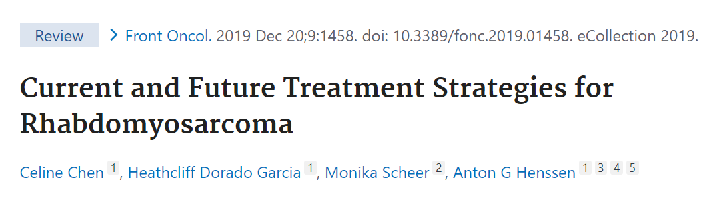
Over 90% of RMS patients have low-risk localized disease and can be cured by multimodal treatment. However, for patients with metastatic or recurrent disease, the overall survival rate is only 21% and 30%, respectively. Approximately one-third of pediatric RMS patients will develop progressive disease or recurrence. The final survival rate of patients with tumor metastasis remains below 20%.
It is mentioned in the article that in the past 30 years, there has been no significant improvement in the survival outcomes of patients with metastatic and recurrent RMS. Therefore, experimental trials should prioritize patients with metastatic or recurrent diseases, including emerging targeted therapy and immunotherapy strategies. In addition, RMS patients can benefit from molecular targeted and immunotherapy methods, which can reduce the toxicity caused by the conventional chemotherapy and radiotherapy.
The effects of chemotherapy and radiotherapy on sarcoma are limited. There is no effective targeted therapy available currently. However, the immune response has an unexpected effect on sarcoma.
Sarcoma is prone to occur in young children, especially those with an incompletely developed immune system. Therefore, many clinical trials of immunotherapy are underway. Chimeric antigen receptor (CAR)-modified T cells can treat tumors by targeting tumor-specific antigens through the immune cytotoxic mechanism.
GIMI has studied the following sarcoma cases with the advanced 4sCAR-T strategy.
RMS Case Introduction
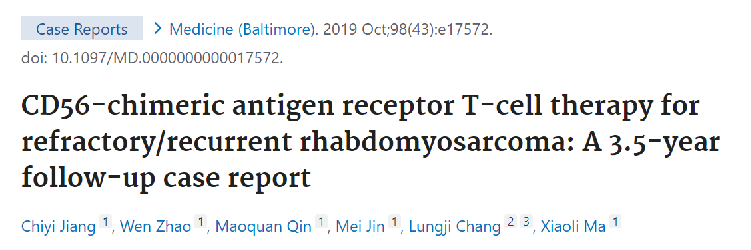
A 2-year-old male patient with a 5-month history of intermittent hematuria was first admitted to the hospital on September 4, 2013. Examination revealed an irregular solid mass in the bladder cavity, and the tumor tissue invaded the posterior urethra. He underwent bladder tumor resection and cystostomy. Due to limited treatment conditions, no postoperative treatment was carried out. The bladder tumor recurred 3 months later.
The postoperative pathological diagnosis in several hospitals was rhabdomyosarcoma (RMS). Postoperative positron emission tomography-computed tomography (PET-CT) showed residual lesions in the bladder, and no other metastatic lesions were found.
According to the clinical classification of the International RMS Study Group, he was diagnosed as stage IIIa and TNM stage 2 (T2a, N0, M0) before treatment. After the second tumor resection according to the BCH-RMS intermediate-risk group treatment strategy, the condition was upgraded to the BCH-RMS high-risk group. However, 5 months after chemotherapy and 3 months after radiotherapy, local recurrence of bladder cancer was detected by imaging examination. Therefore, bladder resection was performed again according to the RMS high-risk group. Since the patient's tumor stained CD56 positive based on pathological immunohistochemistry, to prevent recurrence and eliminate minimal residual lesions, after extensive consultation, it was decided to engage the patient in the fourth-generation CD56-targeted CAR-T cell (4SCAR56) therapy, a CAR-T equipped with a safety mechanism as subsequent consolidation treatment. At 47 months old, 23 months after receiving systemic treatment, the patient received the 4SCAR56 CAR-T cell infusion. The dose of CAR-T cells was equivalent to 3.6 × 10⁶/kg. The patient's vital signs and general condition were continuously monitored after infusion. Overall, the CAR-T treatment process was smooth, and there was no manifestation of cytokine release syndrome (CRS), such as fever, chills, rash, hypotension, and pain, consistent with the known 4sCAR technology safety profile. The patient was monitored monthly in the first half-year after CAR-T cell infusion, and regularly evaluated every 3 months after 6 months and every 6 months after 1 year, until January 31, 2019. No tumor metastasis or recurrence was observed, and the thickening of the bladder wall disappeared. Complete remission (CR) was achieved according to the Response Evaluation Criteria in Solid Tumors (RECIST). In conclusion, 3.5 years after receiving 4sCAR56 treatment, the patient remained in CR status and was stable.
Reference:
Osteosarcoma Introduction
Another common sarcoma - osteosarcoma (OS), adopts a wide variety of therapies in clinical treatment, including adjuvant chemotherapy and maximum surgical resection (such as limb amputation and/or hemivertebrectomy). However, the prognosis of children with high-risk diseases remains unsatisfactory, with an overall survival rate of 20-40%. Currently, the chemotherapy regimen for osteosarcoma in clinical practice is to combine doxorubicin, carboplatin, methotrexate, and ifosfamide treatment for 6 to 12 months before and after surgery. However, the efficacy of these first-line treatments for most recurrent osteosarcomas is moderate, highlighting the need for in-depth research to identify new targets and improve preclinical models to predict the molecular drug response of refractory and/or recurrent diseases in patients.
In the literature on sarcoma molecular research, various targeted therapies have been summarized. Among them, the treatment strategy based on T cells has been actively pursued. The main purpose is to identify specific tumor target antigens expressed by malignant cells and enhance the infiltration of T cells into tumor tissues, so as to completely eliminate cancer cells to prevent recurrence.
The risk of tumor recurrence is related to the persistent residual cancer cells. Unfortunately, residual cancer cells cannot be detected clinically or biologically after the resection of the primary tumor. Cancer cells with low metabolism, strong adaptability, and characteristics of long-term survival mechanisms can lead to recurrence. The CAR-T therapy has been characterized by the ability of genetically engineered chimeric receptors on T cells to target and kill tumor cells in a non-MHC-restricted manner. The known tumor antigens expressed by sarcomas, such as Her2, GD2, ROR2 or EGFRviii, B7-H3 (CD276), are usually detected at a low expression level. Importantly, the CAR-T cells can target tumor antigens at even very low expression levels. The GIMI has trials to evaluate the safety and efficacy of the 4sCAR-T therapy in sarcoma patients.
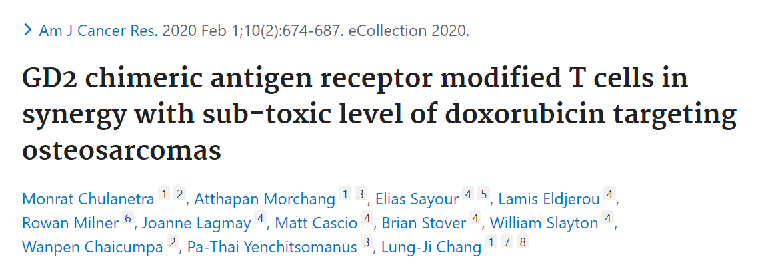
GIMI has evaluated whether GD2-targeted CAR-T cells can induce cytotoxicity against OS tumor cells. It has been proven that GD2 CAR-T cells are very effective in inducing the death of OS. At the same time, it was found that after interacting with GD2 CAR-T cells, the OS cells were induced to upregulate the expression of PD-L1. In specific interactions, the tumor also induced CAR-T cells to overexpress the exhaustion marker PD-1, promoting the apoptosis of CAR-T cells. To further enhance the killing activity of CAR-T cells against OS, it is shown that doxorubicin in the standard chemotherapy regimen for OS can exert a synergistic effect with CAR-T cells, reducing the expression of PD-1/PD-L1 and effectively killing OS tumor cells.
Patients with residual and refractory sarcoma may benefit from targeted therapy to eliminate drug-resistant tumors and metastatic recurrence. The CAR-T therapy can precisely eliminate drug-resistant tumor cells and has specificity, providing a new treatment modality for recurrent/refractory sarcoma. GIMI has proven and proposed that the use of the fourth-generation 4SCAR-GD2 T cells with a safety design can combine with sub-toxic levels of doxorubicin and exert a synergistic target killing effect.
Conclusion
Sarcomas account for only 1% of all malignancies. Therefore, obtaining experimental treatment evidence for sarcoma is challenging. Moreover, the heterogeneity of individual tumors also hinders the development of evidence-based treatment strategies. The treatment method proposed here is neither histology-specific nor a widely standardized method. In the current academic atmosphere, the advantage of sarcoma research lies in collaboration between basic science and practitioners. Continuous collaborative efforts will enable the research to be advanced and focused enough to produce clinically significant efficacy evidence in specific sarcoma patient populations.
References:
 TEL:010-82346080
About Us
Company ProfileNCI Project
Blood CancerService
Immune technology portfolioCase Study
Blood Cancer Research Wechat